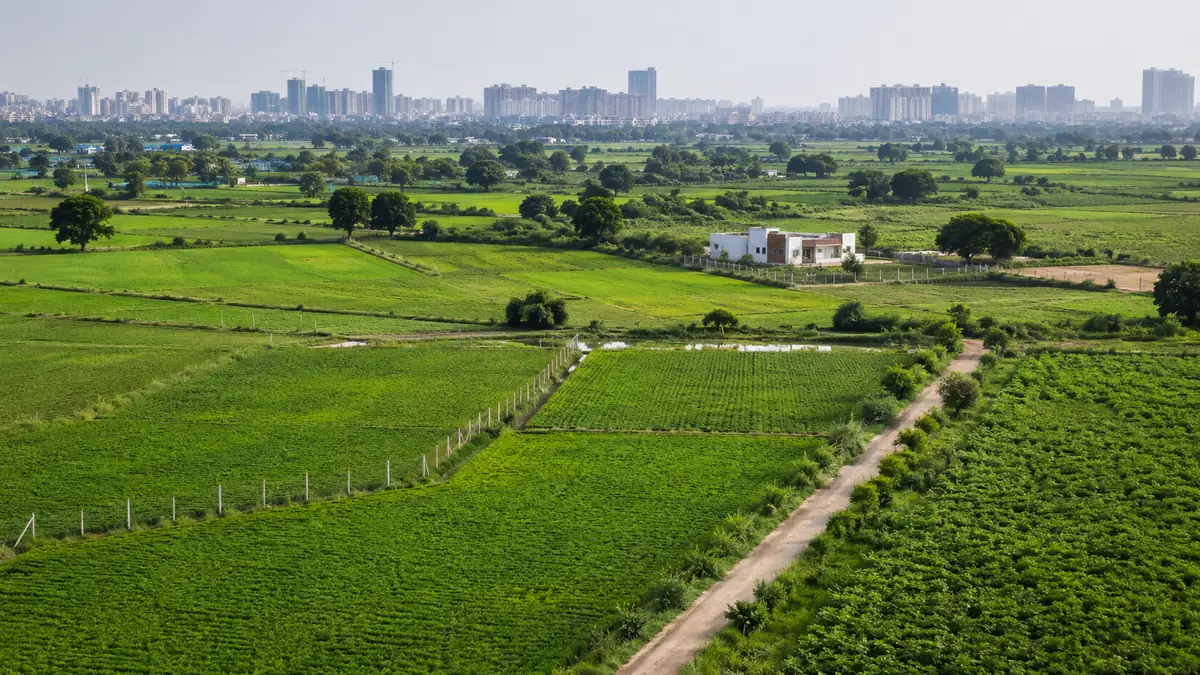
A listing may call itself a weekend farm, managed farmland, farm plot, or nature plot. Those marketing terms do not decide whether an NRI can buy it. The official government land records do.
Before you pay a token advance, ask a property lawyer one direct question: What does the current government record classify this land as? Do not rely only on the developer’s brochure or a verbal assurance from a broker.
What the usual situations look like
Buying agricultural land as an NRI or OCI
Generally not permitted under the general FEMA permission for property purchases.
Buying a residential or commercial property
Generally permitted, subject to the applicable conditions and payment rules.
Receiving agricultural land as a gift
Not covered by the general FEMA permission for gifts to an NRI or OCI.
Inheriting agricultural land
Generally permitted, subject to FEMA conditions and applicable state law.
Land bought before becoming an NRI
It can generally continue to be held if it was lawfully acquired while you were resident in India.
Inheritance and earlier ownership are different
An NRI or OCI can generally inherit agricultural land, subject to FEMA conditions and the land law of the state where the property sits. This can include land that a parent legally purchased and later leaves through inheritance; it is not limited only to traditional ancestral property.
Similarly, if you legally bought agricultural land while you were resident in India and later became an NRI, that change does not automatically require a sale. Continuing to hold lawfully acquired property is different from making a new purchase after becoming non-resident.
Returning to India does not remove every hurdle
Once you genuinely become a person resident in India under FEMA, the NRI-specific restriction may no longer apply in the same way. But agricultural land is also governed by state law. Rules can vary on agriculturist status, land ceilings, conversion, assigned land, and tribal land. Check both the FEMA position and the relevant state rules before committing.
Due diligence before paying an advance
“Other NRIs have bought here” and “the registration office will register it” are not legal due diligence. Registration, title, FEMA compliance, and state land-law compliance are separate questions.
Before you sign
Share the survey number, current revenue records, title chain, and the claimed land-use status with a qualified property lawyer. If the seller says the land has been converted, ask for the approval and verify it independently. Keep your passport, PAN, overseas-residency proof, address proof, and banking trail ready for the transaction review.